Child and Adolescent Psychiatry
Developmental Psychopathology Unit, Hôpital Femme Mère Enfant
The Child and Adolescent Developmental Psychopathology Department at Pierre Wertheimer Neurological Hospital provides level-3 specialized care for children and adolescents under 16 years of age presenting with complex psychiatric and neurodevelopmental conditions. Organized around inpatient care, medical psychology and liaison activities, perinatal mental health, and a specialized Evaluation and Research Unit for Neurodevelopmental Disorders (UERTD – CRTLA child psychiatry), the department delivers comprehensive, multidisciplinary assessments and care pathways. Clinical activities focus on severe emotional and behavioral dysregulation, mood and anxiety disorders, eating disorders, neurodevelopmental disorders, and acute suicidal crises. The department is a core component of the FIND-HCL network (Interdisciplinary Federation for Neurodevelopmental Disorders), contributing to coordinated diagnostic pathways, expertise sharing, and integrated care trajectories from early childhood onward, in close collaboration with pediatric, neurological, genetic, and perinatal services.

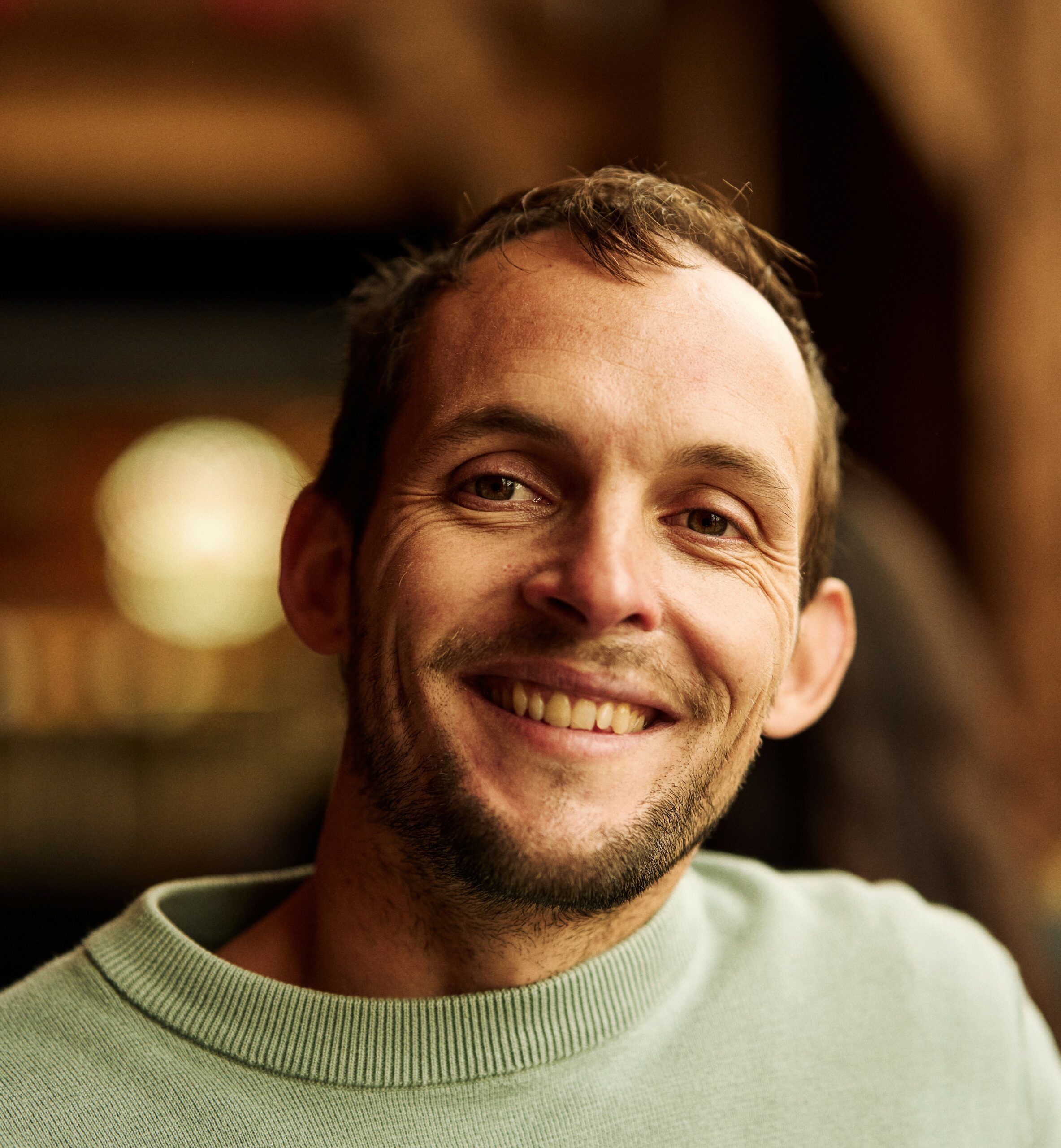
Dr Christophe GAULD
ISC-MJ Social neuroscience and comparative development team member
Institut des Sciences Cognitives Marc Jeannerod (ISC-MJ) – UMR 5229 (CNRS)
Other team members:
– Prof. Pierre FOURNERET (ISC-MJ Social neuroscience and comparative development)
– Dr Lucie JUREK (RESHAPE lab, UCBL1 – INSERM U1290)
– Pr Noel PERETTI (CarMeN lab, équipe DO-IT)
Main collaborations:
– ISC-MJ : Prof. Pierre FOURNERET
– RESHAPE, INSERM U1290 : Dr Lucie JUREK
– S2HEP (Sciences, Société, Historicité, Éducation et Pratiques, Lyon 1)
– IRPhil (Institut de Recherches Philosophiques de Lyon, Lyon 3)
– CRNL
– HCL : Departments of Neuropediatrics, Obstetrics, Nutrition, and Pediatric Sleep Medicine
– EPSM Le Vinatier
Research themes
- Developmental trajectories of psychiatric and neurodevelopmental symptoms in childhood and adolescence, with a particular focus on emotional dysregulation, learning disorders, ADHD, autism spectrum conditions, and intellectual disability, investigated through multidisciplinary clinical assessment, longitudinal modeling, and large-scale cohort analyses;
- Artificial intelligence, statistical and computational approaches in child and adolescent psychiatry, including trajectory modeling, symptom network analysis, dynamical systems, and idiographic frameworks, applied to heterogeneous clinical data and large databases, with perspectives on environmental determinants of mental health and digital twin modeling for personalized care (‘psychiator’);
- Neuroscientific and translational research bridging developmental neuroscience and clinical practice, integrating ecological momentary assessment, symptom networks, and advanced neuroimaging approaches, including ultra-high-field MRI (7T), in collaboration with cognitive and computational neuroscience laboratories;
- Sleep and circadian disturbances across neurodevelopmental and psychiatric conditions, examined as transdiagnostic markers of vulnerability, prognosis, and functional impairment, and studied at the interface of pediatric sleep medicine, psychiatry, neurology, and perinatal care;
- Clinical and translational research structured around hospital-based reference centers and inter-service care pathways, including neurodevelopmental disorders, eating disorders, suicide prevention and psychiatric emergencies, psychotrauma, early psychosis risk states, and liaison psychiatry addressing lived experiences of chronic pediatric conditions;
- Epistemological, methodological, and social science approaches to child and adolescent psychiatry, focusing on symptom definition, classifications, clinical reasoning, and the integration of artificial intelligence into care practices, developed in close collaboration with philosophy and social science research units;
This research program is embedded within the FIND network (https://www.chu-lyon.fr/find-hcl, deputy medical officer: Dr Christophe Gauld) and aligns with institutional priorities of the HCL and Vinatier hospitals, notably neurodevelopmental disorders, perinatal mental health, and psychiatric emergencies. It aims to structure inter-service clinical pathways, strengthen translational research, and connect computational models with lived clinical realities, through national and international collaborations in neuroscience, public health, and the humanities.
Main ongoing projects
- SNANeuroCHIPS: Symptom network modeling in child and adolescent psychiatry (PI)
- NUITS: Sleep symptom networks and transdiagnostic modeling of sleep disturbances (co-PI with Bordeaux Univ.)
- CARDEMA (IRESP): Symptom network approaches in addiction psychiatry (PI, in collaboration with Bordeaux Univ.)
- DYNAPSY: Dynamical systems approaches to psychiatric symptom trajectories (co-PI with Aix-Marseille University)
Cohorts
EcoAnx: Eco-anxiety in hospitalized adolescents
Main national and international collaborations
National collaborations:
- CONDOR (Coordination and Orientation Platforms)
- RETAFORM (Clermont-Ferrand)
- PANDAS RIST (Montpellier)
- Task Force LÉNA (Clermont-Ferrand)
- IGEDEPP (Paris)
- OVE (Paris)
- MISAPSY (Paris)
International collaborations (active collaborations):
- University of Amsterdam, The Netherlands : Development of computational and developmental approaches in child and adolescent psychiatry, Prof. Denny Borsboom
- New York University, USA : Conceptualization of symptoms in sleep medicine, Prof. Jerome Wakefield ; Pedagogy in philosophy of psychiatry, Prof. Awais Aftab
- Stockholm University, Sweden: Perceived symptom network analyses (PECAN), Prof. Lars Klintwall
- University of New Zealand, New Zealand : Enactivism and computation, Prof. Kris Nielsen
- University of Queensland, Australia : Psychiatry and epilepsy, Prof. Aileen McGonigal
- Université du Québec, Canada : Autism spectrum disorder, Prof. Guillaume Dumas
Publications
1. Gauld C, Bartolomei F, Micoulaud-Franchi JA, McGonigal A. Symptom network analysis of prefrontal seizures. Epilepsia. 2025;66(7):2566-2577. doi:10.1111/epi.18372
2. Gauld C, Darrason M, Dumas G, Micoulaud-Franchi JA. Personalized Medicine for OSA Syndrome in a Nutshell: Conceptual Clarification for Integration. Chest. 2021;159(1):451-452. doi:10.1016/j.chest.2020.07.086
3. Gauld C, Lopez R, Geoffroy PA, et al. A systematic analysis of ICSD-3 diagnostic criteria and proposal for further structured iteration. Sleep Med Rev. 2021;58:101439. doi:10.1016/j.smrv.2021.101439
4. Gauld C, Maquet J, Micoulaud-Franchi JA, Dumas G. Popular and Scientific Discourse on Autism: Representational Cross-Cultural Analysis of Epistemic Communities to Inform Policy and Practice. J Med Internet Res. 2022;24(6):e32912. doi:10.2196/32912
5. Gauld C, Lopez R, Morin C, et al. Symptom network analysis of the sleep disorders diagnostic criteria based on the clinical text of the ICSD-3. J Sleep Res. 2022;31(1):e13435. doi:10.1111/jsr.13435
6. Gauld C, Blanken TF, Klintwall L, Micoulaud-Franchi JA. Introducing Perceived Causal Networks in Sleep Medicine. J Sleep Res. 2025;34(6):e70035. doi:10.1111/jsr.70035
7. Gauld C, Viaux-Savelon S, Falissard B, Fourneret P. Precision child and adolescent psychiatry: reductionism, fad, or change of identity of the discipline? Eur Child Adolesc Psychiatry. 2024;33(4):1193-1196. doi:10.1007/s00787-023-02240-6
8. Gauld C, Micoulaud-Franchi JA. Environmental psychiatry: A proposed framework to address the global mental health burden. L’Encephale. 2022;48(5):487-489. doi:10.1016/j.encep.2022.08.010
9. Gauld C, Jurek L, Fourneret P. Diversity, epistemic injustice and medicalization. Cortex J Devoted Study Nerv Syst Behav. 2024;176:234-236. doi:10.1016/j.cortex.2024.03.003
10. Gauld C. Psychiatric disorders: A plea for complexity. Aust N Z J Psychiatry. 2022;56(6):730. doi:10.1177/00048674211038858
